Commercial Insurance for Shuttle Operators: What New Drivers Need to Know Before Starting a Passenger Transportation Business
Starting a shuttle business can be an exciting opportunity. Whether you want to operate airport transfers, intercity transportation, private group trips, corporate transportation, or scheduled routes, becoming a professional shuttle operator can create a flexible and profitable business.
However, one of the first things every new operator needs to understand is commercial insurance for passenger transportation.
Many new drivers are surprised when they discover that insurance for a passenger van is very different from regular personal vehicle insurance. When you transport paying passengers, you are operating a commercial transportation business, and the insurance requirements reflect the additional responsibility.
At Zowp, our goal is to help independent shuttle operators understand the industry, prepare properly, and grow their transportation business.
Why Do Shuttle Operators Need Commercial Insurance?
If you are carrying passengers for payment, a personal auto insurance policy is generally not designed to cover your business activities. Once a vehicle is being used to transport paying customers, it is considered a commercial operation and requires insurance that reflects that risk. Commercial passenger transportation insurance helps protect you, your vehicle, your business, and your passengers in the event of an accident, injury, or loss.
Using a personal auto policy for commercial driving without notifying your insurer can create serious problems. If the insurer discovers that the vehicle was being used for paid passenger transportation, they may deny a claim, remove coverage, or cancel the policy due to material misrepresentation. This can leave an operator financially responsible for damages, injuries, and legal costs.
The exact coverage requirements depend on several factors, including your vehicle type, passenger capacity, location, routes, operating authority, and the requirements of your insurance provider and local regulations.
Before starting operations, shuttle operators should confirm with a commercial insurance specialist that their policy specifically covers paid passenger transportation.
Why Is Passenger Van Insurance More Expensive? (And How Can You Reduce Your Starting Costs?)
A common question from new shuttle operators is:
"Why does insurance cost so much for a shuttle van?"
The answer comes down to risk.
A personal vehicle usually carries a small number of people for personal trips. A passenger shuttle may carry 8, 12, or even more people while operating hundreds of kilometres per day.
Insurance companies consider several important factors when determining pricing. However, there are also ways for new operators to reduce their initial costs by starting smaller and building a strong operating history.
1. Passenger Capacity: Start Smaller to Reduce Insurance Costs
The number of passengers you carry directly impacts your insurance cost.
For example, a 15-passenger van represents a higher insurance risk because you are responsible for more passengers at the same time. In the event of an accident, the potential liability is much higher compared with a smaller vehicle.
If your budget is limited, starting with an 8-passenger van can be a smart way to enter the industry. A smaller passenger vehicle can help reduce your initial insurance costs while allowing you to build revenue, experience, and a commercial driving history before upgrading to a larger 12- or 15-passenger shuttle.
As your business grows and your financial situation improves, you can consider moving to a larger vehicle with more capacity.
2. Driving Distance and Operating Radius: Start With Shorter Routes
Long-distance shuttle routes can also increase insurance costs because they create more exposure.
A vehicle travelling between major cities or operating beyond a larger radius may have higher premiums because:
The vehicle spends more time on the road
More highway driving is involved
The service area is larger
There are more potential accident locations
For new operators, starting with a shorter route can help control expenses. For example, launching an Ottawa to Montreal shuttle service may be a more manageable starting point compared with a longer Ottawa to Toronto route.
Shorter routes can reduce fuel costs, vehicle wear, and operating exposure while you build customer demand and establish your insurance history.
3. Driving Record and Safety Practices: Protect Your Business
One of the biggest challenges for new shuttle companies is the lack of commercial driving history.
Insurance providers look at experience, claims history, and driving records when determining pricing. A new operator with no previous commercial passenger transportation experience will usually pay more than an established company with several years of safe operation.
When starting out, protecting your driving record is one of the best ways to reduce future insurance costs.
Focus on maintaining:
No accidents
No claims
No driving convictions
Safe operating practices
Adding safety equipment such as dashboard cameras (dash cams) can also help protect your business. A dash cam can provide evidence in the event of an accident, help defend against false claims, and demonstrate that you take safety seriously.
When starting, you may have access to fewer insurance options. After building a positive claims history, more insurers may become available, potentially creating better pricing opportunities.
4. Build Your Business History Before Expanding
Insurance costs are often highest during the first years of operation because the insurer has limited information about your business.
The good news is that costs can improve over time as you demonstrate safe operations.
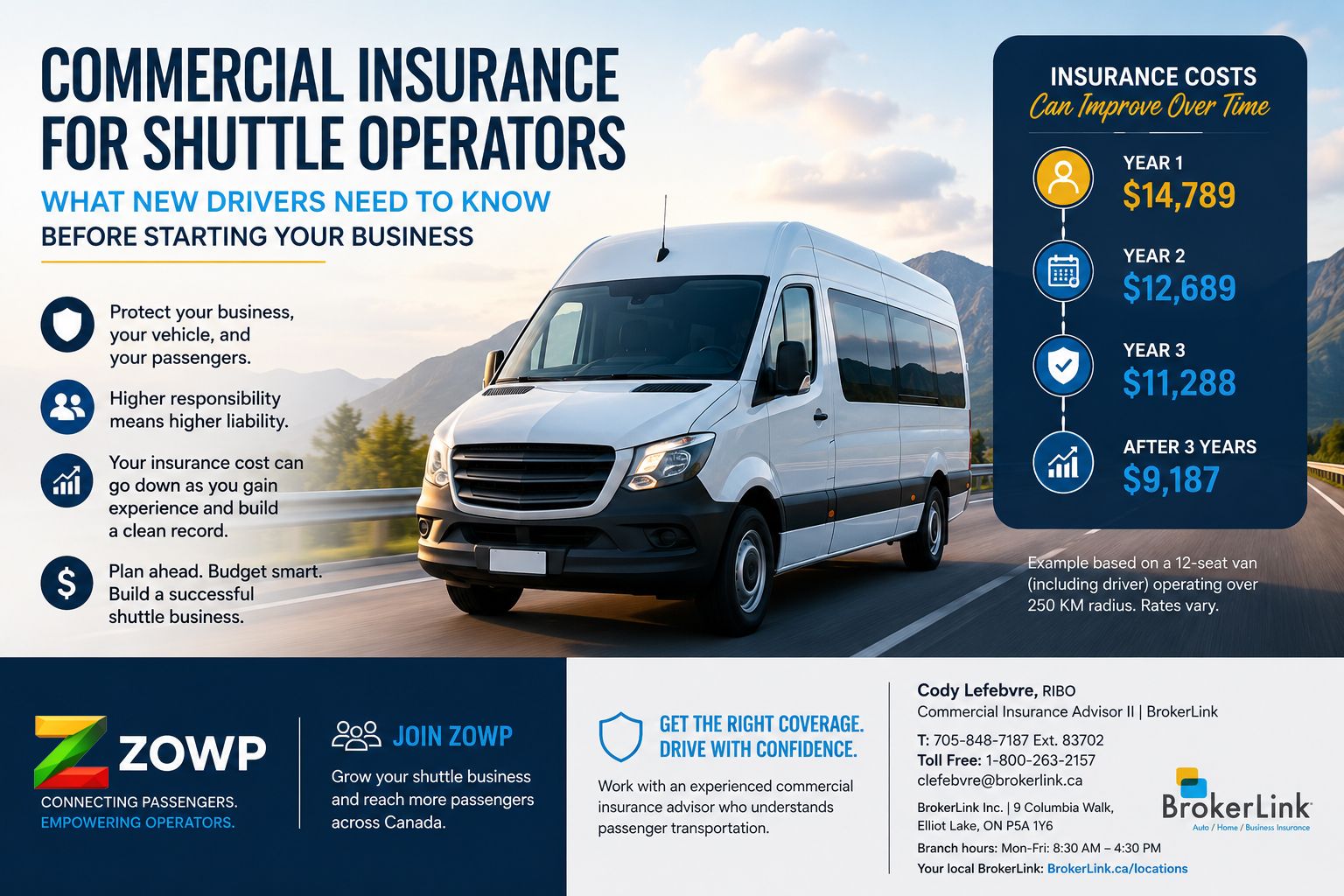
A typical example for a new 12-passenger shuttle operator could look like:
First year: approximately $14,789/year
After one claim-free year: approximately $12,689/year
After two claim-free years: approximately $11,288/year
After three claim-free years: approximately $9,187/year
Actual pricing depends on many factors, including location, vehicle type, passenger capacity, driver history, coverage limits, and insurance market conditions.
The first years can be the most challenging, but starting with a manageable vehicle, choosing efficient routes, and building a strong safety record can significantly reduce costs over time.
How Much Should New Shuttle Operators Budget to Start a Business?
Insurance is only one part of the total cost of starting a shuttle business. Before purchasing a vehicle, new operators should understand all the expenses involved in running a passenger transportation company.
A successful shuttle business requires planning for:
Vehicle Costs
Your vehicle is one of your largest investments. Depending on your business model, you may start with a smaller passenger van and upgrade as demand grows.
Consider costs such as:
Vehicle purchase or financing payments
Commercial vehicle registration
Insurance
Maintenance and repairs
Tires
Brakes and other wear items
Insurance Costs
Insurance should be included in your business plan before purchasing a vehicle.
For example:
A $14,789 annual insurance premium equals approximately:
$1,232 per month
This is only one operating expense and should be combined with your other monthly costs to understand your real break-even point.
Fuel and Operating Expenses
Shuttle operators can drive thousands of kilometres every month, making fuel one of the biggest ongoing expenses.
Plan for:
Fuel costs
Oil changes
Preventive maintenance
Unexpected repairs
Vehicle cleaning and detailing
Keeping your vehicle reliable and professional is important because your reputation depends on providing a safe and comfortable experience for passengers.
Technology and Software
Running a shuttle business requires more than just a vehicle. Operators need tools to manage bookings, payments, customers, and daily operations.
This is where Zowp helps simplify the process.
Zowp provides an all-in-one shuttle platform designed to help operators:
Manage bookings and passengers
Track sales directly from your dashboard
Organize trips and schedules
Simplify customer management
Grow your passenger base by helping connect operators with customers looking for transportation
Instead of managing multiple systems separately, operators can use one platform to help run and grow their shuttle business.
Marketing and Customer Acquisition
Finding passengers is one of the biggest challenges for new operators.
Budget for:
Online advertising
Website costs
Social media promotion
Partnerships
Customer referral programs
Having the right tools and a platform that helps bring customers can reduce the difficulty of getting started.
Licensing and Administrative Costs
Depending on your location and business model, you may also need to budget for:
Business registration
Permits and licensing
Accounting software
Banking fees
Professional services
Starting a shuttle business is not only about buying a van. It is about building a complete transportation operation.
By planning for insurance, vehicle costs, technology, marketing, and daily expenses from the beginning, new operators can create a more realistic budget and build a sustainable business.
With Zowp, operators can access the tools needed to manage their operations and attract passengers, making it easier to launch and grow a shuttle business.
Looking for Commercial Insurance for Your Shuttle Business?
Finding the right insurance broker is an important step when starting a passenger transportation company.
For operators looking for commercial transportation insurance guidance, you can contact:
Cody Lefebvre, RIBO
Commercial Insurance Advisor II | BrokerLink
Phone: 705-848-7187 Ext. 83702
Email: clefebvre@brokerlink.ca
BrokerLink Inc.
Become a Shuttle Operator With Zowp
Starting a transportation business requires more than just a vehicle. Successful operators understand their costs, maintain safe vehicles, provide excellent customer service, and build trust with passengers.
Zowp is building a platform that helps independent shuttle operators connect with passengers, manage bookings, and grow their transportation business.
Whether you already operate a passenger van or you are planning your first shuttle route, understanding insurance, costs, and operations is the first step toward building a successful business.
Ready to start your journey as a shuttle operator?
Join Zowp and grow your transportation business with technology built for modern passenger transportation.
Comments
No comments yet. Be the first to share your thoughts.
Log in to join the conversation.